5G and Beyond

5G represents a significant leap in mobile network technology, but it’s not the end of the road. As we look toward “5G and beyond,” there are several key aspects and future trends to consider. Let’s break it down: What is 5G? 5G is the fifth generation of mobile network technology, succeeding 4G LTE. It brings […]
Low-Code/No-Code Development

Low-Code/No-Code Development refers to a set of software development approaches that enable users to create applications with minimal or no coding knowledge. These platforms use visual interfaces and pre-built components, allowing users—from business analysts to citizen developers—to design, build, and deploy applications quickly and efficiently. Key Characteristics 1. Visual Development: Users can drag and drop […]
Microservices Architecture
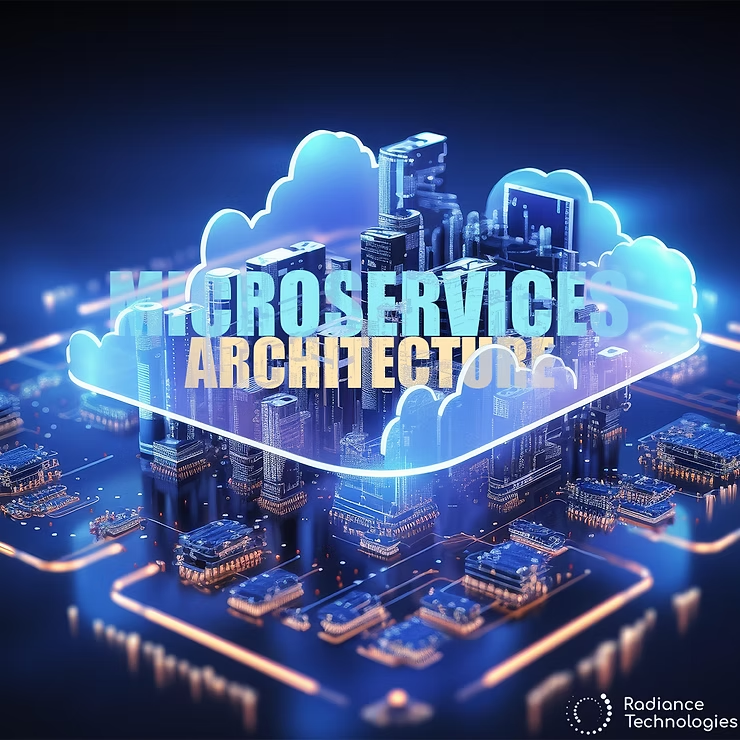
Microservices Architecture is a software design approach that structures an application as a collection of loosely coupled, independently deployable services. Each service is designed to perform a specific business function and communicates with other services through APIs. Key Characteristics Independence: Each microservice can be developed, deployed, and scaled independently, allowing teams to work on different […]
DevOps and Continuous Delivery

DevOps is a set of practices and cultural philosophies that aim to improve collaboration between development and operations teams, enhancing the software delivery process. Continuous Delivery (CD) is a key aspect of the DevOps approach, focusing on automating the software release process to ensure that code changes can be deployed to production reliably and quickly. […]
Augmented Reality (AR) and Virtual Reality (VR)

Augmented Reality (AR) and Virtual Reality (VR) are two transformative technologies that are gaining significant traction across various industries in 2024. Here’s a closer look at both, including their applications, benefits, challenges, and trends. Augmented Reality (AR) Definition: AR overlays digital content (images, sounds, videos) onto the real world, enhancing the user’s perception of their […]
Sustainability in Software Development
Sustainability in software development refers to practices and principles that minimize the environmental impact of creating and maintaining software while promoting social responsibility and economic viability. Here’s a detailed overview of this important topic. Key Principles of Sustainability in Software Development 1. Energy Efficiency: – Design software that uses resources efficiently, reducing energy consumption during […]
Progressive Web Apps
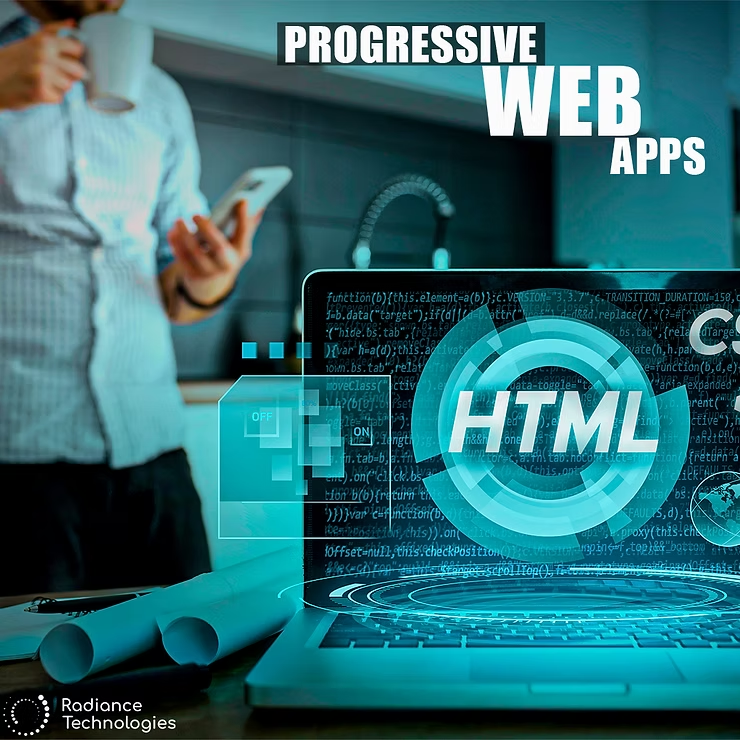
Progressive Web Apps (PWAs) are a type of application software built using standard web technologies, designed to provide a user experience similar to native apps on mobile devices and desktops. They combine the best of web and mobile applications, offering increased engagement and functionality without the need for installation through app stores. Here’s a comprehensive […]
Cloud-Native Applications
Cloud-native applications are designed to take full advantage of cloud computing frameworks. They are built using a set of principles and practices that allow for scalability, resilience, and flexibility. Here are some key characteristics: 1. Microservices Architecture: Applications are composed of loosely coupled services that can be developed, deployed, and scaled independently. 2. Containers: Technologies […]
Software Development Lifecycle (SDLC) Innovations
The Software Development Lifecycle (SDLC) has evolved significantly over the years, incorporating various innovations to enhance efficiency, quality, and collaboration. Here are some key innovations shaping modern SDLC practices: 1. Agile Methodologies: Agile frameworks like Scrum and Kanban promote iterative development, allowing teams to respond quickly to changes and deliver incremental improvements. 2. DevOps Practices: […]
Green Software
Green software refers to the practice of designing, developing, and operating software in a way that minimizes its environmental impact. This concept recognizes that software applications, systems, and infrastructure consume energy and resources, and aims to create solutions that are both efficient and sustainable. Here are some key aspects of green software: Key Principles 1. […]