Exploring the 8 Different Types of Cybersecurity Threats

Cybersecurity refers to the protection of devices, processes, infrastructure, and assets of the organization from cyberattacks, data theft, breaches, unauthorized access, etc. With the advent of technology and the increasing interconnectedness of organizational systems and networks, effective cybersecurity management and strategy are necessary for organizations of all sizes and types accordingly. Investments are flowing into […]
💡 Quantum computing breakthroughs.

The full power of next-generation quantum computing could soon be harnessed by millions of individuals and companies, thanks to a breakthrough by scientists at Oxford University Physics guaranteeing security and privacy. This advance promises to unlock the transformative potential of cloud-based quantum computing and is detailed in a new study published in the influential U.S. scientific journal Physical […]
Navigating the AI Frontier: New Regulations and Ethical Guidelines Aim to Shape the Future of Artificial Intelligence 🤖

The conversation around artificial intelligence (AI) regulation and ethics has intensified. Governments and international organizations are actively discussing frameworks to govern the use of AI, focusing on issues such as privacy, bias, and transparency. Recent proposals include stricter regulations on AI deployment and more robust guidelines for ethical AI practices. These discussions aim to address […]
Fortifying the Digital Frontier: Latest Innovations and Threats in Cybersecurity 🔐🛡️

Cybersecurity remains a critical concern as new threats and vulnerabilities continue to emerge. Recent reports highlight sophisticated cyberattacks targeting major corporations and government agencies, underscoring the need for advanced security measures. In response, there have been significant innovations in cybersecurity technologies, including enhanced threat detection systems, improved encryption techniques, and more comprehensive incident response strategies. […]
Generative AI and Large Language Models
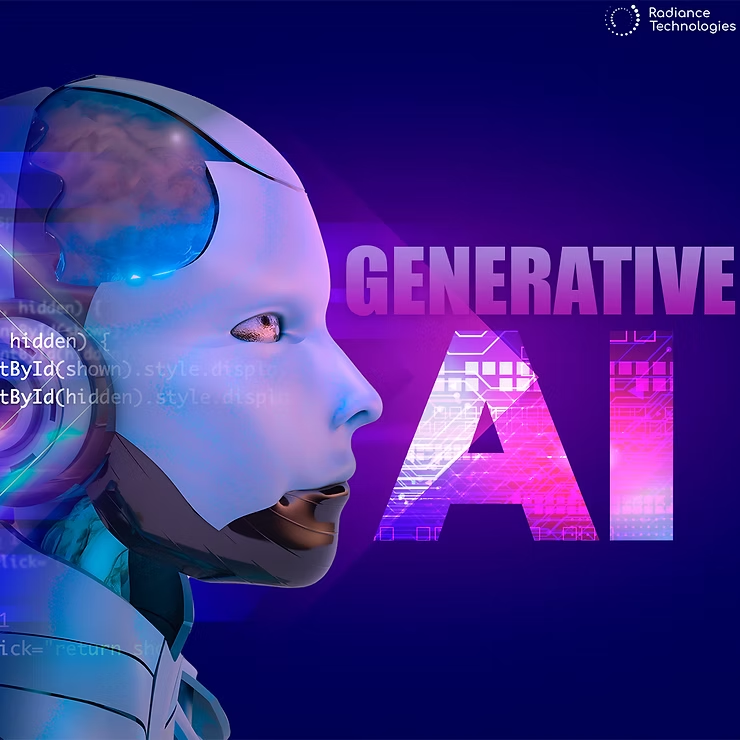
Generative AI refers to algorithms designed to create new content, whether it’s text, images, music, or other forms of data. Unlike traditional AI, which is typically used for classification or prediction tasks, generative AI focuses on producing new, original data that resembles the data it was trained on. Key Aspects of Generative AI: Models and […]
Edge Computing and IoT Integration
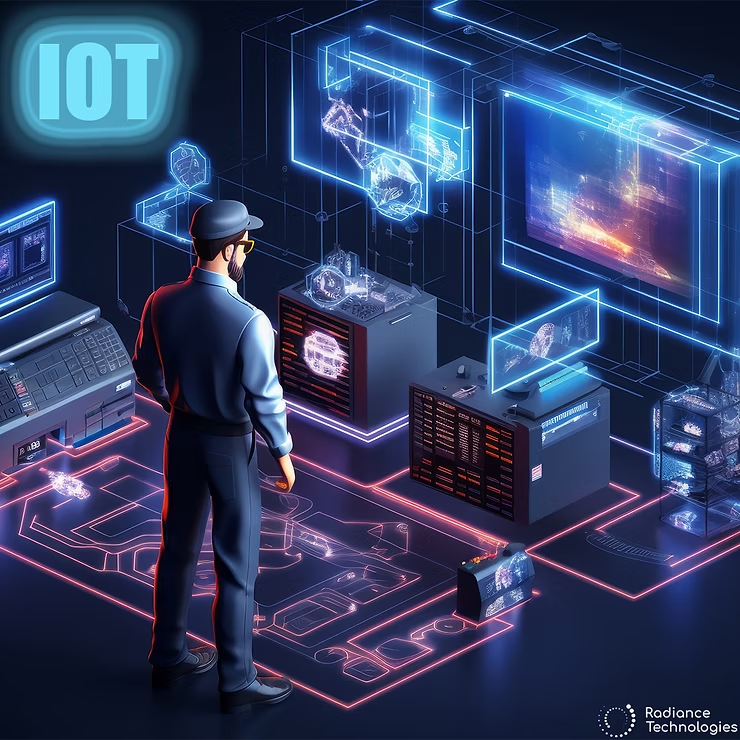
Edge computing and IoT (Internet of Things) are a powerful combination that is transforming various industries by enhancing performance, reducing latency, and improving data management. Let’s break down how they work together and what makes their integration so impactful: What is Edge Computing? Edge computing involves processing data closer to the source of data generation, […]
5G and Beyond

5G represents a significant leap in mobile network technology, but it’s not the end of the road. As we look toward “5G and beyond,” there are several key aspects and future trends to consider. Let’s break it down: What is 5G? 5G is the fifth generation of mobile network technology, succeeding 4G LTE. It brings […]
Low-Code/No-Code Development

Low-Code/No-Code Development refers to a set of software development approaches that enable users to create applications with minimal or no coding knowledge. These platforms use visual interfaces and pre-built components, allowing users—from business analysts to citizen developers—to design, build, and deploy applications quickly and efficiently. Key Characteristics 1. Visual Development: Users can drag and drop […]
Microservices Architecture
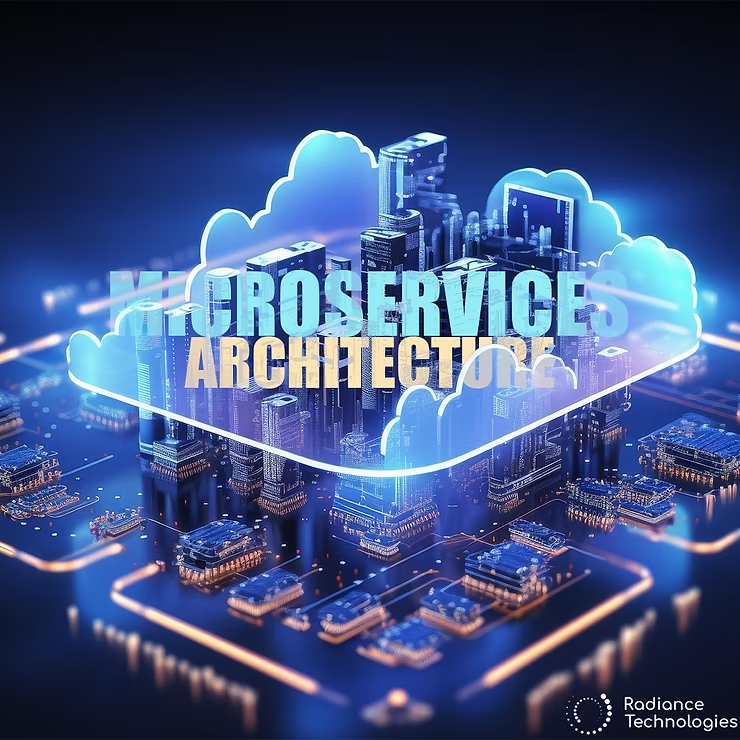
Microservices Architecture is a software design approach that structures an application as a collection of loosely coupled, independently deployable services. Each service is designed to perform a specific business function and communicates with other services through APIs. Key Characteristics Independence: Each microservice can be developed, deployed, and scaled independently, allowing teams to work on different […]
DevOps and Continuous Delivery

DevOps is a set of practices and cultural philosophies that aim to improve collaboration between development and operations teams, enhancing the software delivery process. Continuous Delivery (CD) is a key aspect of the DevOps approach, focusing on automating the software release process to ensure that code changes can be deployed to production reliably and quickly. […]